A payment collection app for distributors in India earns its place only if it compresses days sales outstanding. If it does not, it is an expensive messaging tool. The shape of most Indian distributor balance sheets explains why: margins of 3 to 5%, credit terms of 30 to 90 days, and concentration risk on 20 to 40 parties that each owe between ₹50,000 and ₹8 lakh. A ₹10 crore turnover business at 60-day DSO has roughly ₹1.6 crore sitting in receivables at any moment, funding someone else's working capital instead of earning. Dropping that DSO from 60 days to 50 frees about ₹27 lakh, which for many distributors is larger than a full year of net profit. So the job of a real collection app is not to send more reminders. It is to invoice the same day goods move, remind at the right intervals, collect on UPI at 0% MDR, and post each receipt back into Tally so the cash actually comes home faster.
Key Highlights
- An Indian distributor on ₹10 crore turnover with 60-day DSO has roughly ₹1.6 crore permanently locked in receivables; a 10-day DSO reduction frees ₹27 lakh
- UPI now handles 60 to 75% of B2B distributor receipts under ₹1 lakh; NEFT and RTGS dominate above that
- A payment collection app for distributors India must do four things in order: dispatch fast, provide a one-tap payment path, run age-based reminders, and auto-reconcile into Tally
In This Article
- The receivables reality for Indian distributors
- What a payment collection app actually needs to do
- UPI vs NEFT vs cash vs cheque: where each fits
- A capability table to judge any app against
- A Coimbatore auto-parts distributor's rebuild
The receivables reality for Indian distributors
Margins of 3 to 5%. Credit terms of 30 to 90 days. Customer concentration risk on 20 to 40 parties that each owe somewhere between ₹50,000 and ₹8 lakh. This is the shape of most Indian distributor balance sheets.
The consequence: a ₹10 crore turnover business has roughly ₹1.6 crore sitting in receivables at any moment, assuming a 60-day DSO. That money is not earning interest; it is funding someone else's working capital. Every day of DSO compression frees real cash. At 60-day DSO, dropping to 50 frees about ₹27 lakh, which for most distributors is larger than a full year of net profit.
A payment collection app for distributors India, if it does its job, compresses this DSO. If it does not, it is an expensive messaging tool.
What a payment collection app actually needs to do
Four things, in order of importance.
- Send the invoice out fast
Speed matters more than format. An invoice created at 11 AM and sent to the retailer at 6 PM is three lost hours of payment window. The payment collection app should dispatch the invoice on WhatsApp within seconds of voucher creation. Not a PDF attached to an email that nobody checks. A WhatsApp message with the invoice and a payment link.
- Provide a one-tap payment path
This is where UPI has changed B2B collections permanently. A payment link that opens directly into PhonePe, Google Pay or Paytm, pre-filled with amount and merchant details, gets paid 3 to 5 times more often than a bank account number printed at the bottom of the invoice. For a retailer, it is one thumb-tap versus five minutes of re-entering IFSC codes.
- Send reminders tied to invoice age
Covered in detail in the WhatsApp reminder cadence playbook. The point is that the reminder system must be alive to which invoices are pending and which are paid, and must speak in the distributor's own voice, not a generic bank recovery SMS.
- Auto-reconcile into Tally
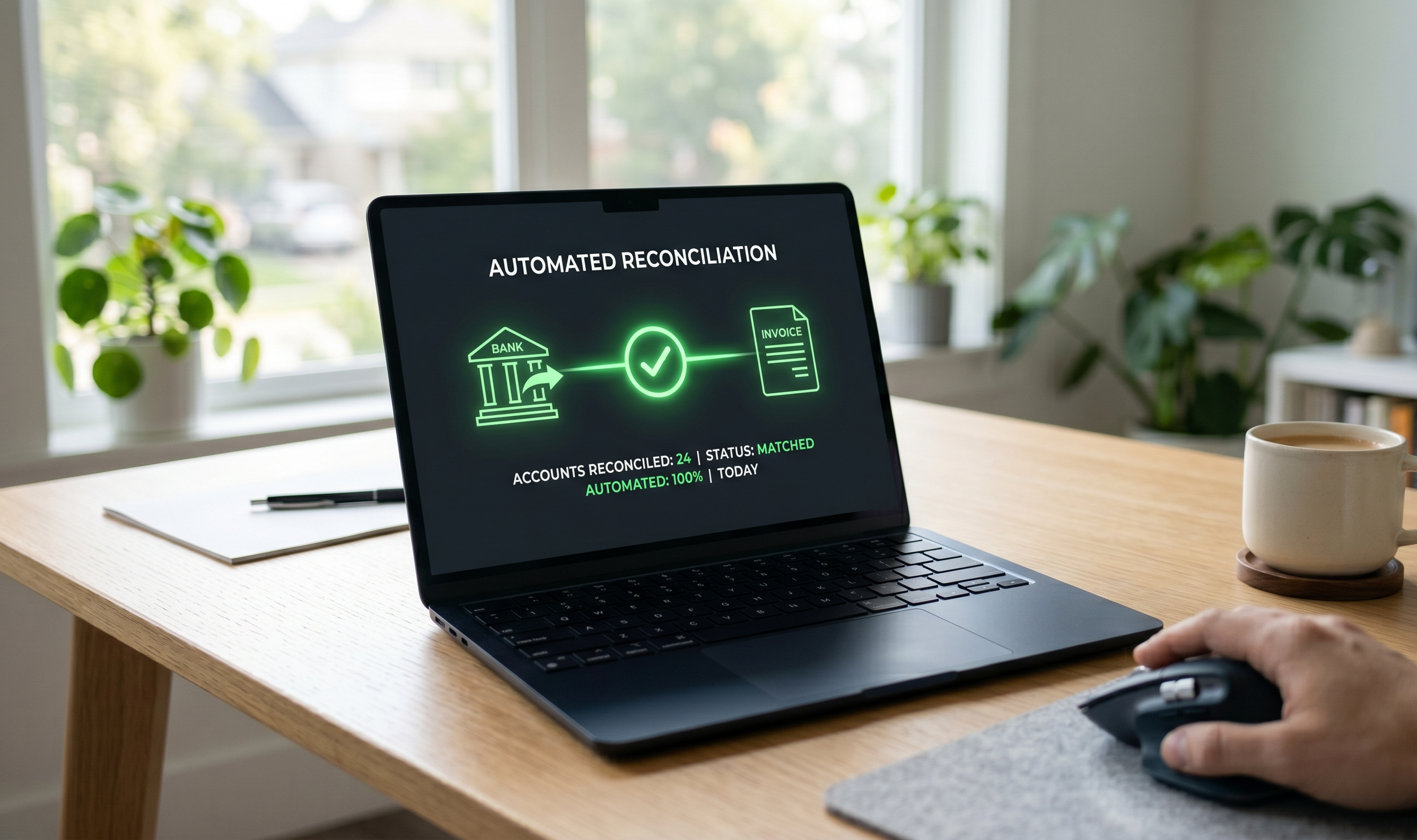
This is the feature that separates 2018-era apps from 2026-era apps. When ₹42,000 arrives in your bank account at 4:17 PM from retailer Sharma Traders, the app should match that UTR to invoice INV-2614 within minutes and post a receipt voucher in Tally automatically. No 9 PM session. No accountant squinting at a bank statement.
UPI vs NEFT vs cash vs cheque: where each fits
| Channel | Typical invoice size | Reconciliation difficulty (without app) | Settlement speed |
|---|---|---|---|
| UPI (payment link) | ₹500 to ₹1 lakh | Easy with reference, hard without | Instant |
| NEFT | ₹50,000 to ₹10 lakh | Medium, needs UTR matching | 1 to 2 hours |
| RTGS | ₹2 lakh and above | Medium | Near-instant |
| Cash | Any | Hard; no trail | Instant |
| Cheque | Any | Hardest; clearing time and bounces | 2 to 4 days |
The shift over the last three years is clear: UPI share of distributor receipts has gone from about 15% in 2021 to 60 to 75% in 2026 for transactions under ₹1 lakh. A payment collection app that cannot generate and track UPI links is missing the centre of the market.
A capability table to judge any app against
When comparing options, score each on these eight capabilities. Rate each Yes / Partial / No.
| Capability | What "Yes" looks like |
|---|---|
| WhatsApp invoice dispatch | Invoice auto-fires on creation, includes PDF and payment link |
| One-tap UPI link | Link opens directly in buyer's UPI app with amount pre-filled |
| Staged reminder cadence | Stage 1–5 messages, age-based, auto-paused on payment |
| UTR-to-invoice matching | Incoming bank UTR auto-matches, including partial and split payments |
| Receipt voucher posting | Posts to Tally automatically once matched |
| Split-payment handling | A ₹1,00,000 receipt covering three invoices auto-splits correctly |
| Tally deployment compatibility | Works with your existing Tally Prime install, no data migration |
| Role-based access for salesmen | Each salesman sees only their assigned parties, owner sees all |
Anything scoring below 6 of 8 with confidence is not yet a collection app. It is a messaging app with a payment link bolted on.
Split payment, advances, TDS: the boring details that matter
Three practical details trip up most mobile collection apps at distributor scale.
Split payment. A retailer sends ₹1,00,000 against three pending invoices of ₹35,000, ₹42,000 and ₹23,000. The app must split the receipt across all three vouchers in Tally, not dump ₹1,00,000 against the earliest invoice and leave the other two showing open.
Advances. A big dealer pays ₹2,50,000 upfront for a series of coming deliveries. The app must create an advance receipt, park it on the party's ledger, and auto-apply against invoices as they get raised. Otherwise your outstanding report lies to you for weeks.
TDS adjustments. Corporate buyers often pay 99% and withhold 1% as TDS. The app should handle this as a TDS receivable entry, not treat 1% as short-paid.
If these three cases break, the app's auto-reconciliation is a demo feature, not a daily tool.
A Coimbatore auto-parts distributor's rebuild
A Coimbatore auto-parts distributor, ₹38 crore turnover, 180 retail parties, 60-day DSO. Two accountants, one of whom spent 4 to 5 hours every evening reconciling UPI receipts against invoices. Bounced cheque rate of 8 to 12 a month.
They rebuilt the collection flow over a quarter:
Moved all B2B invoice dispatch to WhatsApp, within 60 seconds of sale voucher creation
Put a UPI payment link on every invoice, with a unique reference per invoice
Turned off cheque collection for parties below ₹2 lakh bill size
Wired incoming UPI and NEFT UTRs to Tally auto-reconciliation with split-payment logic
Set up the five-stage WhatsApp reminder cadence tied to invoice age
After a quarter: DSO fell to 47 days. The 9 PM reconciliation session stopped. Bounced cheques dropped to 2 a month because cheques had mostly gone away. The second accountant got redeployed to GST compliance work instead of data entry.
The cash freed by the DSO compression paid for the app roughly 30 times over in the first year.
What Takkada is, in one sentence
Takkada is a payment collection app for distributors in India, purpose-built for Tally users — invoice dispatch on WhatsApp, UPI payment link on every invoice, five-stage reminder cadence, and UTR-to-invoice auto-reconciliation straight back into Tally.
Frequently Asked Questions
Q: Is a payment collection app different from a payment gateway?
A: Yes. A payment gateway (Razorpay, Cashfree, PayU) processes the transaction. A payment collection app sits above it, ties payments to specific invoices, manages reminders, and posts receipts back into your accounting system. Most collection apps use a payment gateway under the hood.
Q: Can I use a collection app if my buyers prefer cheque or cash?
A: Yes. Most apps let you record cash and cheque receipts manually, so your outstanding stays accurate. The real value compounds when UPI and bank transfers take over, because those are the receipts that can be auto-reconciled.
Q: How do you handle parties who do not have WhatsApp?
A: Rare below ₹5 lakh annual purchase, more common with very traditional retailers. For these, keep the reminder system on SMS with a short link. Most Indian SIM bundles in 2026 have enough data to open a UPI link from a plain SMS.
Q: What is the typical ROI timeline for a payment collection app?
A: For a ₹10 crore-plus distributor with DSO above 55 days, the working-capital freed by a 10-day DSO compression is almost always larger than the annual cost of the app, in the first 30 to 60 days of proper rollout.
Q: Does the app need access to my bank account?
A: For UTR-based reconciliation, yes — usually via read-only bank statement API (Cashfree, Razorpay, Decentro all offer this) or a bank feed aggregator. No write permissions should ever be required for a collection app.
Internal Links
- WhatsApp Payment Reminder for Distributors: A Cadence That Actually Collects
- Payment Link Tally Integration: Collect and Auto-Reconcile
- Auto Reconciliation Tally: The Full Mechanic
Takkada helps Indian distributors using Tally collect payments, send WhatsApp reminders, and generate e-invoices, all from mobile. Book a free demo.