Start from the invoice it adjusts
The note is raised against the original bill rather than as a loose entry, so the party ledger shows what was reduced and which invoice it belonged to.
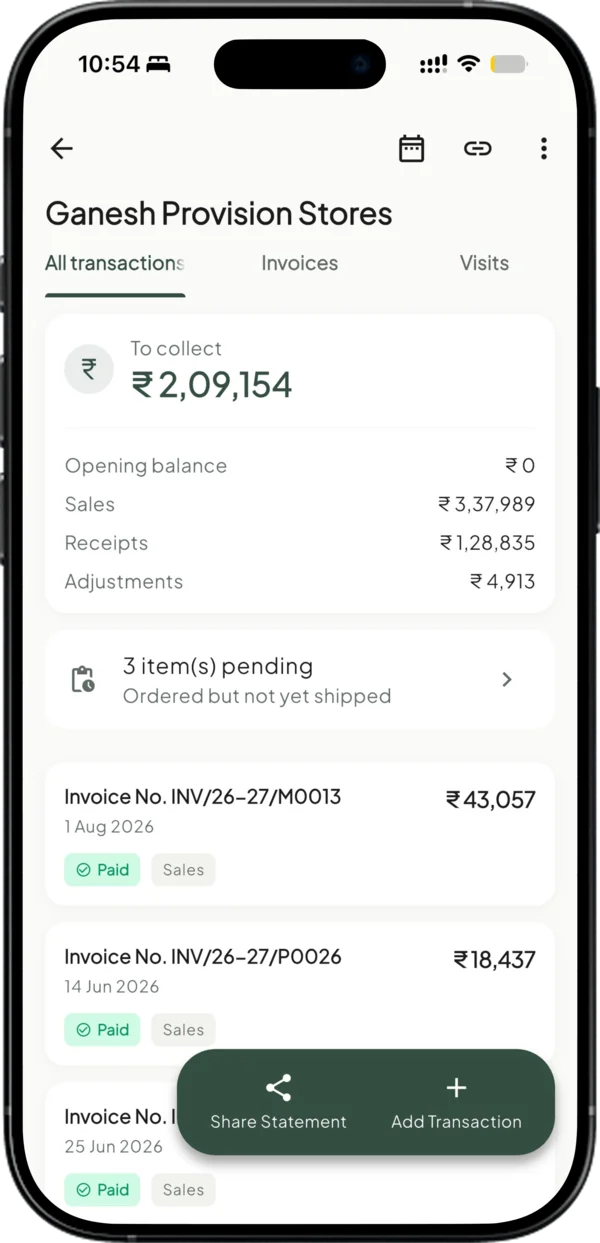

The retailer hands back six damaged cases. Everyone agrees what is owed. The entry still sits in someone’s head until they next open Tally.
A credit note from phone is raised against the original invoice and written into your Tally as a voucher. Goods returned at the shop, a rate difference agreed on the road, or a scheme payout owed to a retailer stops waiting for someone to reach the desktop. Debit notes work the same way.
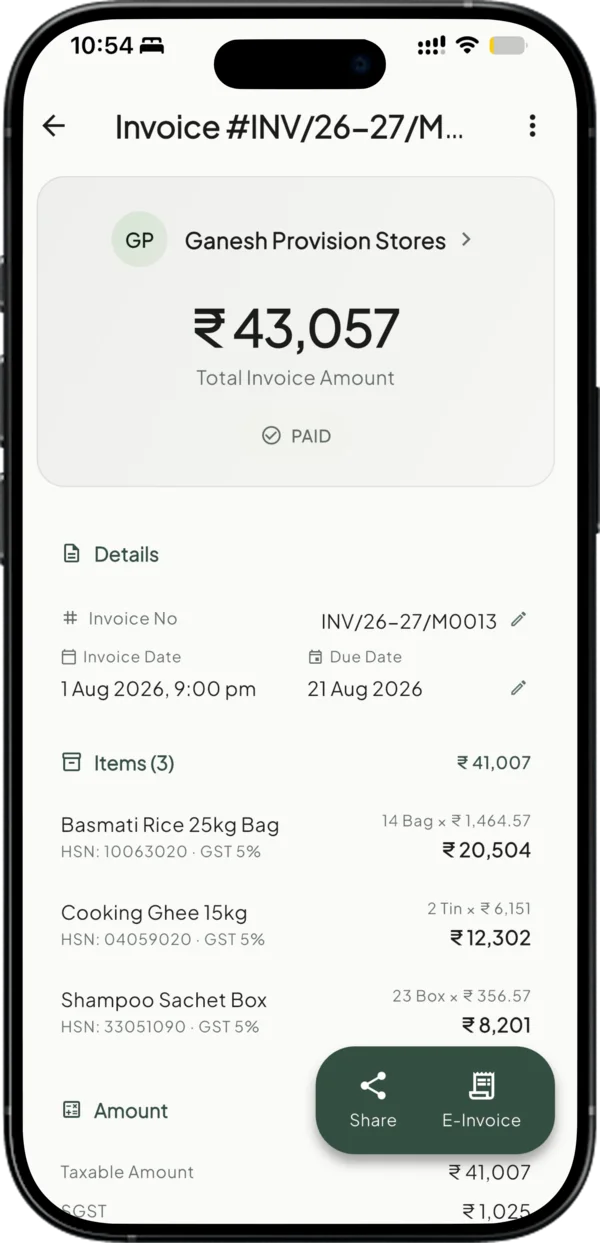
The note is raised against the original bill rather than as a loose entry, so the party ledger shows what was reduced and which invoice it belonged to.
Quantities and rates are entered the way they were on the invoice and the GST follows them, so a return does not become a tax question at filing time.
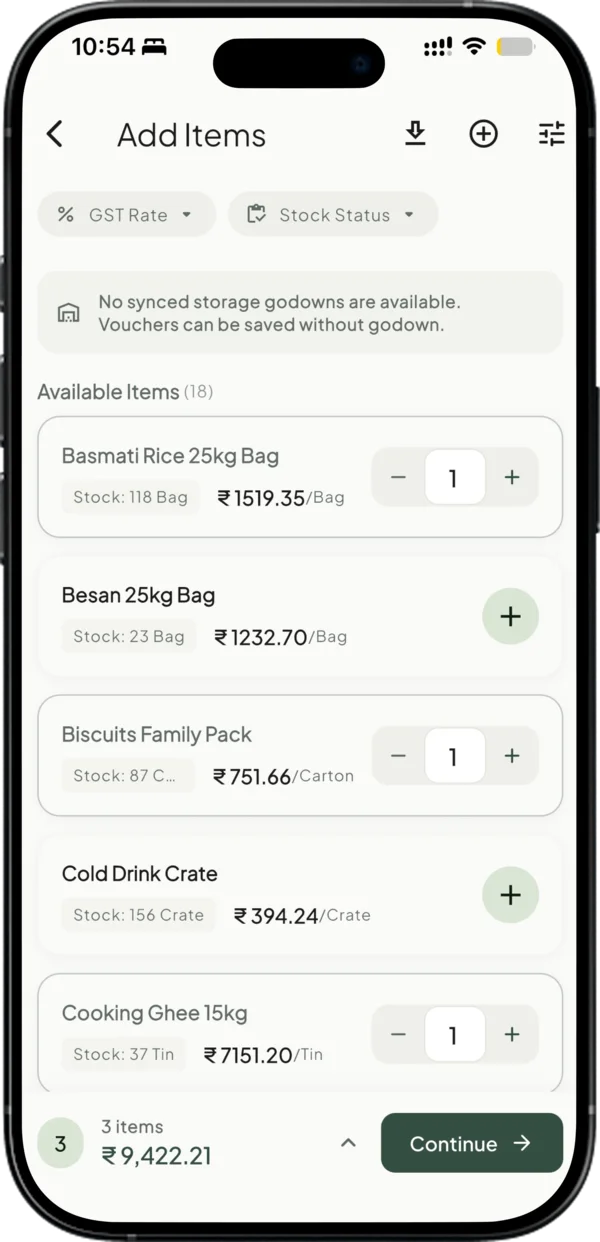
The note is written into your books against the same party, so the receivable moves the day the adjustment was agreed rather than whenever someone gets to the desktop.
What the retailer owes drops by what you have agreed to credit. Nobody chases him for an amount that both of you already know is not payable.
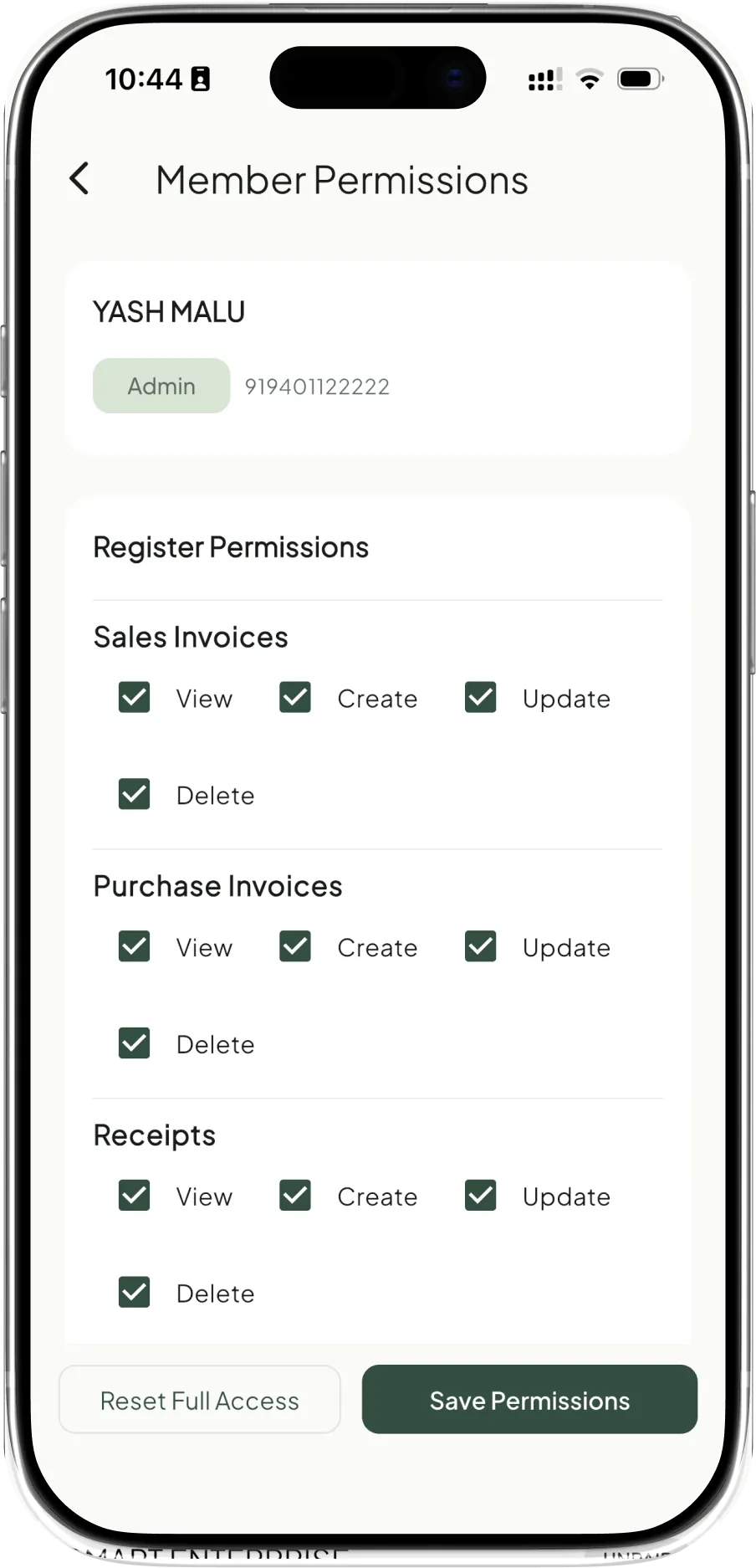
A credit note reduces what you are owed, so create rights for it are set per person like any other register. Your salesman can book orders without being able to write off a bill.
| What you need | Takkada | Other Tally mobile apps |
|---|---|---|
| Note types you can raise from the phone | Credit and debit notes, among 13 voucher types | A narrower set, usually built around sales |
| Linking it to the original invoice | Raised against the bill it adjusts | Sometimes a standalone entry |
| GST on the adjustment | Worked out on the item lines | Varies, and often entered by hand |
| Effect on the receivable | Outstanding moves as soon as the note posts | Depends when the entry reaches Tally |
| Who is allowed to raise one | Create rights set per register, per person | Usually all or nothing |
Checked on 8 August 2026 against the two Tally mobile apps distributors most often weigh against Takkada. We re-check this every fortnight, because their products move.
Creating and editing vouchers from mobile and web, including credit and debit notes, starts at this plan.
Momentum ₹3,375/year + GST on a 3-year term
See what every plan includesYes. The note is raised against the original invoice and written into your Tally as a voucher, with the item lines and the GST on them. Sales returns, rate differences and scheme payouts get recorded the day they are agreed rather than accumulating as notes on paper for someone to enter later.
A credit note reduces what a customer owes you, typically for a return or an agreed rate difference. A debit note raises what you are owed, or records an amount you are charging back to a supplier. Both are raised the same way from the app and both are written into your Tally against the right party.
Yes. Once it posts, the party balance and the receivables reports move with it. This is what stops a retailer being chased for an amount you have already agreed to credit him, which is one of the fastest ways to lose the goodwill that makes the next collection easy.
The tax follows the item lines you enter, the same way it does on the original invoice, so the note carries the right tax treatment into your books. Scheme payouts are worth taking advice on separately, because whether a payout reduces tax or only moves money depends on how the scheme is structured.
Yes, and most distributors do. Create rights are set per register and per person, so someone can be allowed to book orders and raise invoices without being able to issue a credit note. Since a credit note reduces what you are owed, it is usually kept with the people who own the collection decision.
Book a demo. We walk through your setup, your Tally version, and exactly what changes for your business.