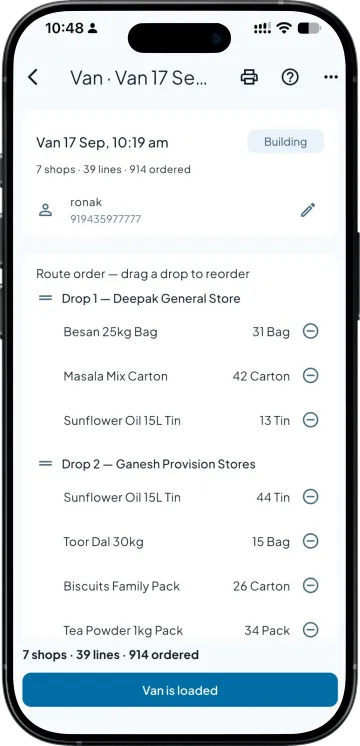
Raise it where the goods are
At the godown door, on the phone, while the vehicle is being loaded. The challan does not wait for someone to be free at the desktop.

The goods are loaded and the driver is waiting. The paperwork is on a desktop three kilometres away, and so is the person who can raise it.
A delivery challan from mobile is raised at the loading point and written into your Tally as a voucher. The godown the goods left from is recorded on it, and a whole beat’s orders can be picked together and loaded onto one van rather than handled one at a time. It converts to an invoice without being rewritten.
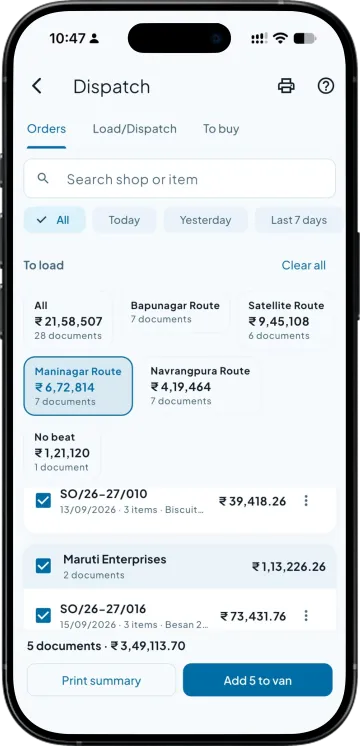
At the godown door, on the phone, while the vehicle is being loaded. The challan does not wait for someone to be free at the desktop.
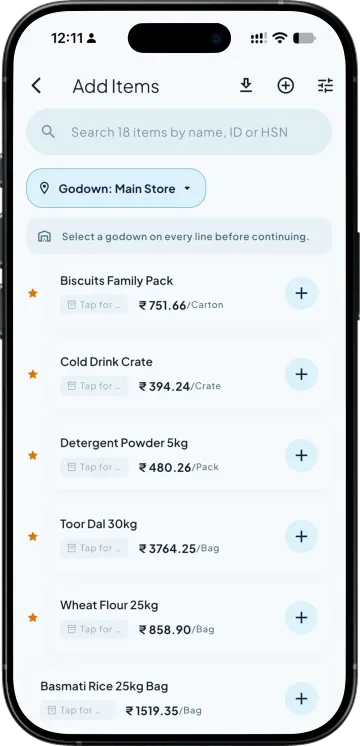
The location the stock actually left from travels with the document, which is what keeps each godown balance honest rather than only the company total.
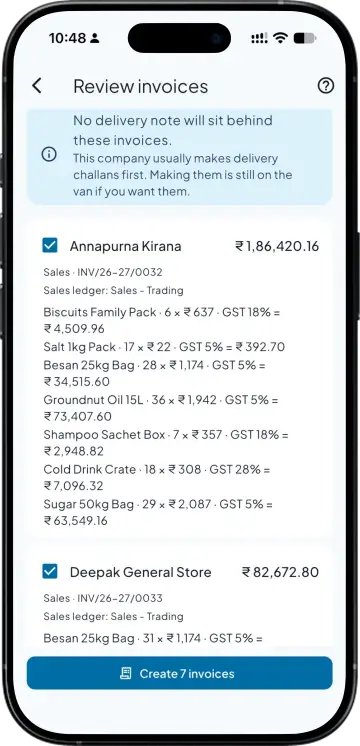
When twenty deliveries leave together, the challans can be raised as a batch instead of one at a time. Dispatch day stops being a queue at one screen.
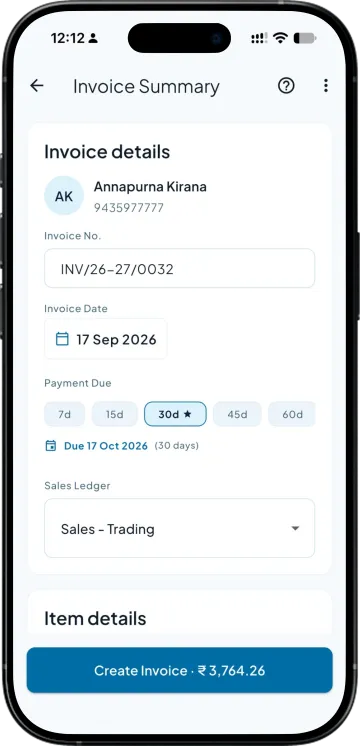
The same items and rates carry into the sales invoice without anyone rewriting them, so what was delivered and what was billed cannot drift apart.
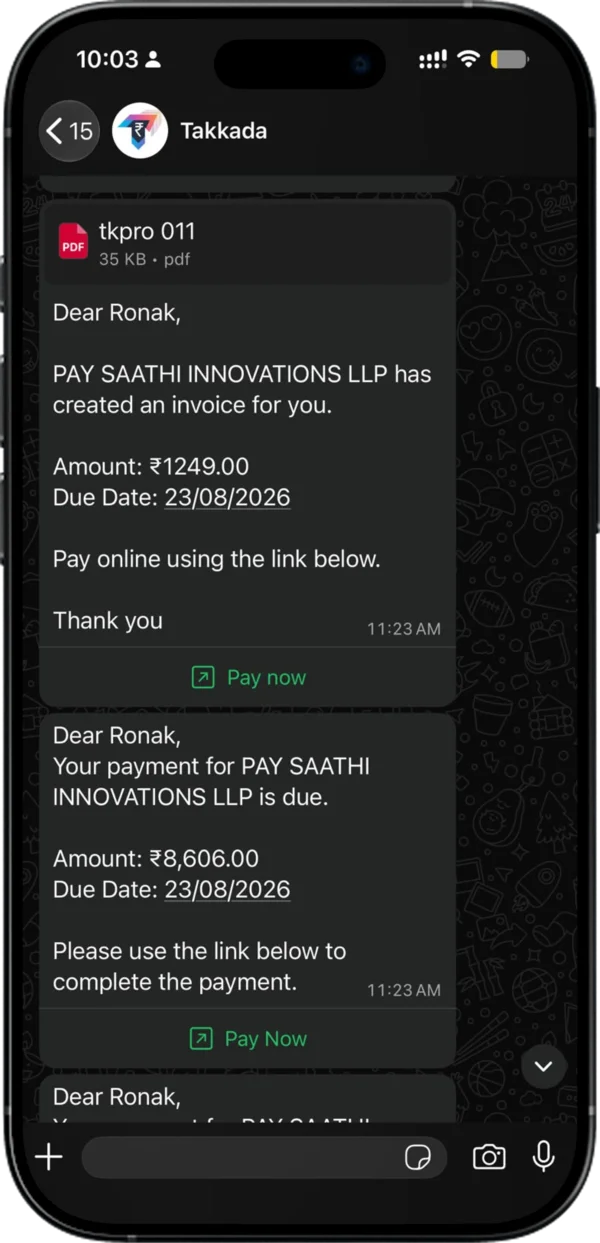
The document goes out on WhatsApp, so the shop has it before the vehicle arrives and nobody is arguing at the gate about what was sent.
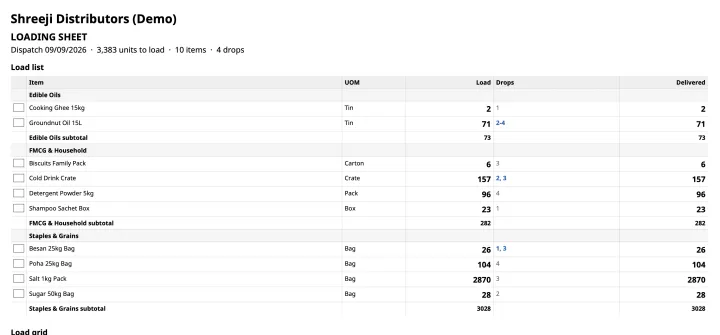
Before the challans exist, the godown works from this. The load list by item, grouped by category with a subtotal each, a tick box on every line and the drops it goes to. Under it the same load as a grid, shop by item, so the driver ticks each drop off at the gate. Printed from the phone, or saved as a PDF on the desktop.
| What you need | Takkada | Other Tally mobile apps |
|---|---|---|
| Raising a challan away from the desktop | From the phone, written into Tally | Often desktop only |
| A full round at once | Challans raised in bulk | One at a time |
| Godown on the document | Carried through to Tally | Frequently dropped |
| Turning it into an invoice | Converted without re-entry | Usually re-keyed |
| Getting it to the retailer | Sent on WhatsApp from the app | Printed, or sent separately |
Checked on 8 August 2026 against the two Tally mobile apps distributors most often weigh against Takkada. We re-check this every fortnight, because their products move.
Delivery challans and sales orders start at this plan, alongside voucher creation from mobile and web.
Momentum ₹3,375/year + GST on a 3-year term
See what every plan includesYes, and it is written into your Tally as a voucher rather than living only in the app. The point of raising it on the phone is that the person standing at the loading bay is usually not the person sitting at the desktop, so the paperwork can be created at the moment the goods actually move.
Yes. When a batch of deliveries goes out together, the challans can be raised in bulk instead of one at a time. On a heavy dispatch day this is the difference between the paperwork keeping pace with the loading and a queue forming at whichever screen can produce the documents.
Yes. The location travels with the document into Tally. Without it the company-wide stock figure can look correct while both individual godowns are wrong, and that mismatch usually stays invisible until someone does a physical count and cannot explain the difference.
It converts, carrying the same party, items and rates across without anyone retyping them. That matters beyond the time saved, because a re-keyed invoice is where quantities and rates quietly stop matching what was actually delivered, and the retailer is the one who spots it.
Yes. Create rights are set per register and per person, so a godown supervisor can be allowed to raise challans without being able to raise invoices or credit notes. You can also restrict which stock groups and locations he sees at all, so his access matches the warehouse he works in.
Book a demo. We walk through your setup, your Tally version, and exactly what changes for your business.