Overdue grouped by age
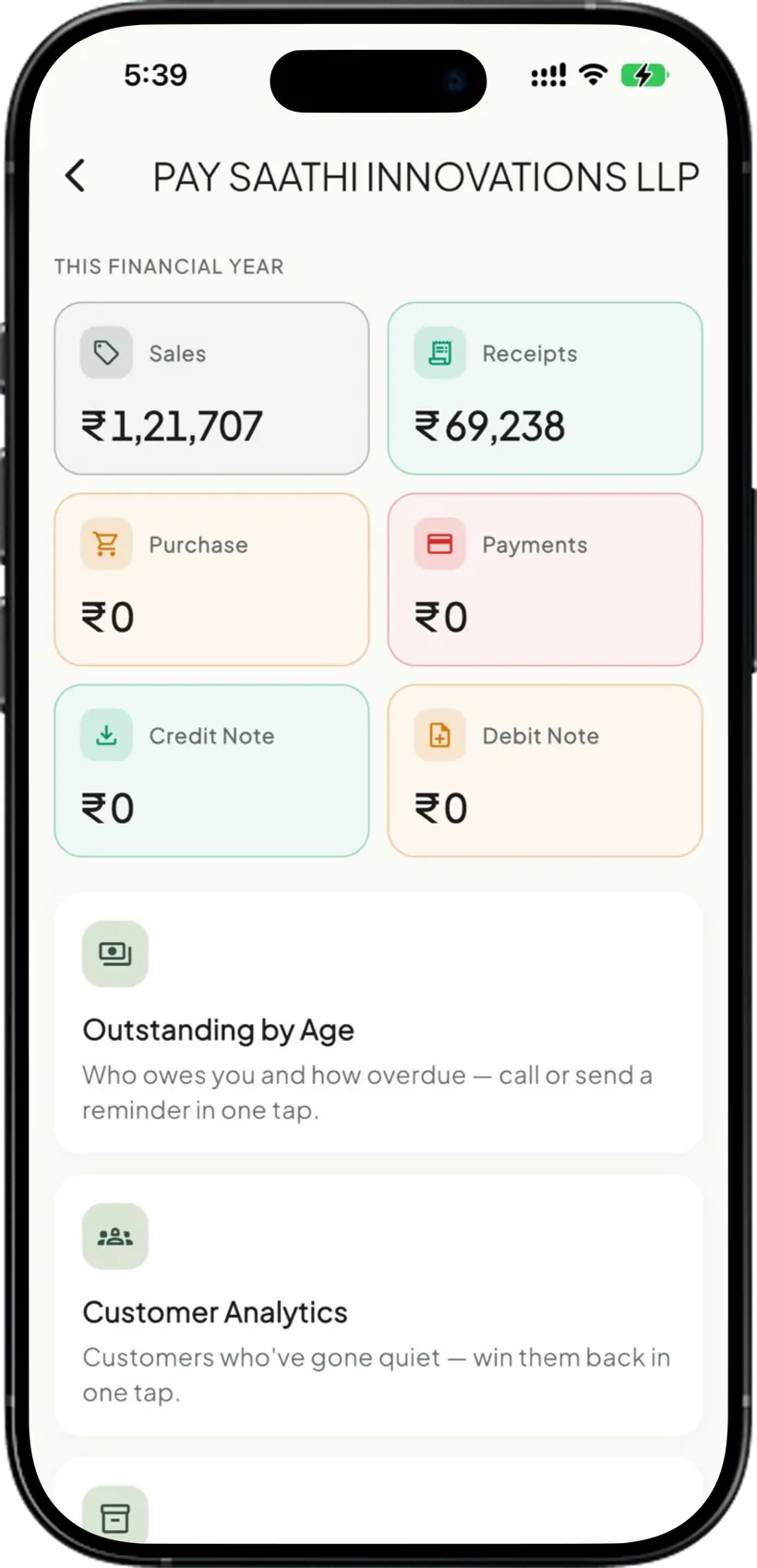
Parties fall into slabs by how long their bills have been outstanding. The list you should be working today separates itself from the list that can wait.
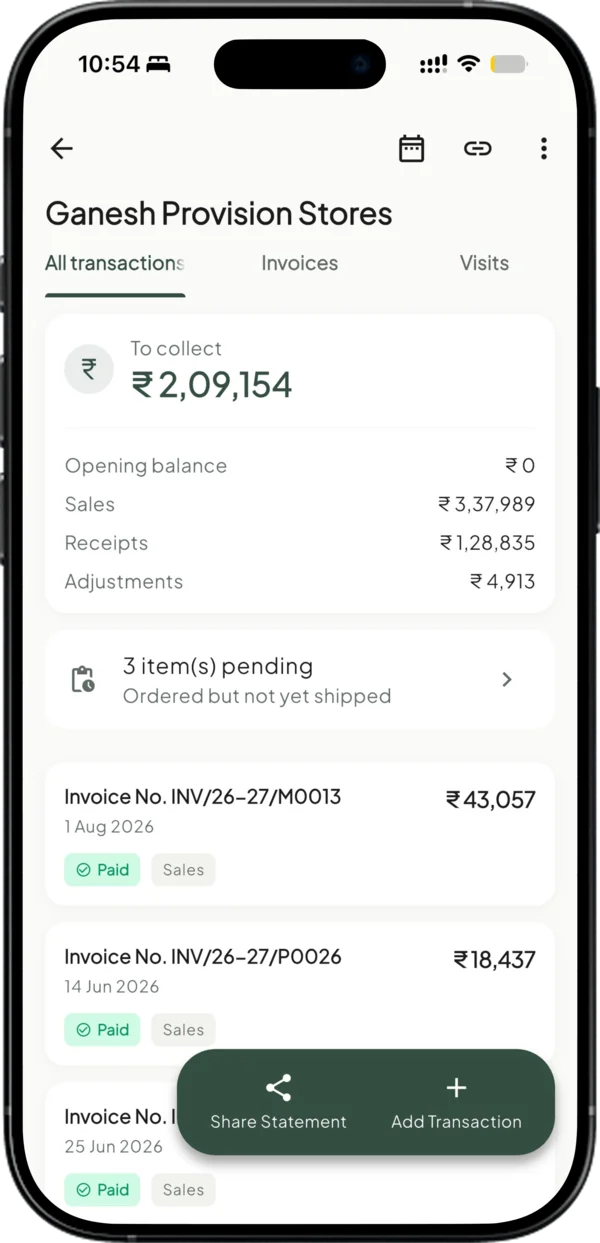

Everyone owes you something. The question worth answering before you start dialling is who has been owing it the longest.
Takkada gives you a debtor ageing report on phone, built from your Tally bill by bill. Every party falls into a slab by how old its overdue invoices are, so the ninety-day retailer stops hiding behind the thirty-day one. You can call, send the ledger or attach a payment link from the same list.
Parties fall into slabs by how long their bills have been outstanding. The list you should be working today separates itself from the list that can wait.
Ageing computed bill by bill rather than on a closing balance, so a part-paid invoice ages on what is still open against it rather than dropping out of the report.
Send the ledger, send the invoice, attach a payment link. The report stops being something you read and becomes the thing you collect from.
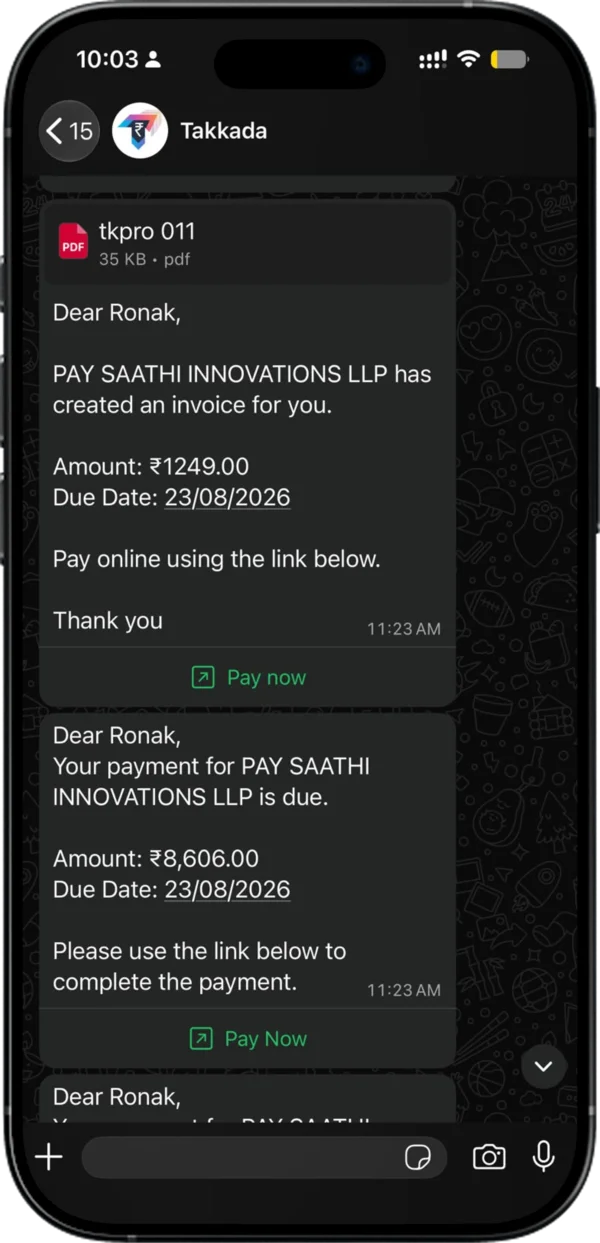
Schedules run before and after the due date, with caps per party so nobody is messaged into ignoring you. Your calls go to the parties that need a human.
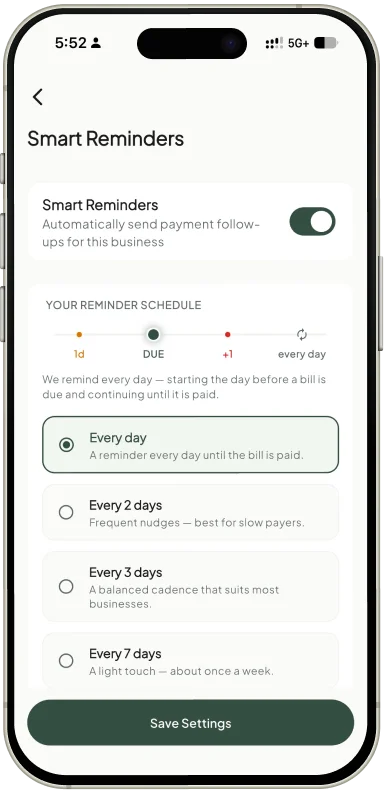
Collections against billing across the year, so you can tell whether the oldest slab is actually shrinking or just being replaced by new arrivals.
| What you need | Takkada | Other Tally mobile apps |
|---|---|---|
| How the ageing is computed | Bill by bill, against each open invoice | Sometimes on the party closing balance alone |
| Choosing your own slabs | Boundaries you set, carried through the report and the export | Usually fixed buckets |
| Collecting from inside the report | Payment link at 0% MDR, no transaction cap, no monthly fee | Read-only, collection arranged elsewhere |
| Chasing the routine cases automatically | Scheduled reminders before and after due date, capped per party | Manual sends, or a single blanket reminder |
| Taking it to your CA | Excel export that keeps the party detail under each slab | Often a totals-only export |
Checked on 8 August 2026 against the two Tally mobile apps distributors most often weigh against Takkada. We re-check this every fortnight, because their products move.
Receivables and the 20+ reports are in the entry plan. Payment collection is an add-on on every plan.
Clarity ₹2,175/year + GST on a 3-year term
See what every plan includesIt groups what your retailers owe by how long it has been outstanding, so money that is thirty days late is separated from money that is ninety days late. The slab matters because recovery odds fall as a bill ages. Working the oldest slab first is what stops a slow-paying party quietly turning into a written-off one.
On each bill. A party that has paid part of an old invoice keeps ageing on the amount still open against it, rather than dropping out of the report because his overall balance looks healthy. This is the difference between an ageing report that finds your real problems and one that flatters them.
Yes. You set the boundaries that match your credit terms rather than accepting fixed buckets, and the report and the Excel export both carry them. A distributor on sixty-day terms and one on thirty-day terms are asking different questions of the same data, so the same slabs would mislead one of them.
Yes. The report exports to Excel with the party detail sitting under each slab rather than the totals alone, so whoever receives it can see which retailers make up a bucket. That detail is usually the first thing a CA asks for after seeing an ageing summary.
No. Scheduled reminders handle the routine cases before and after the due date, with a cap on how often any one party is messaged. That leaves your own calls for the parties where a conversation is actually needed, which is usually the oldest slab rather than the whole book.
Book a demo. We walk through your setup, your Tally version, and exactly what changes for your business.