Tally app for FMCG distributors. Two hundred shops, one phone.
Your beat covers more kirana counters in a day than most businesses invoice in a month. Every one of them is a small bill, a small payment, and a line in a ledger somebody has to key in tonight.
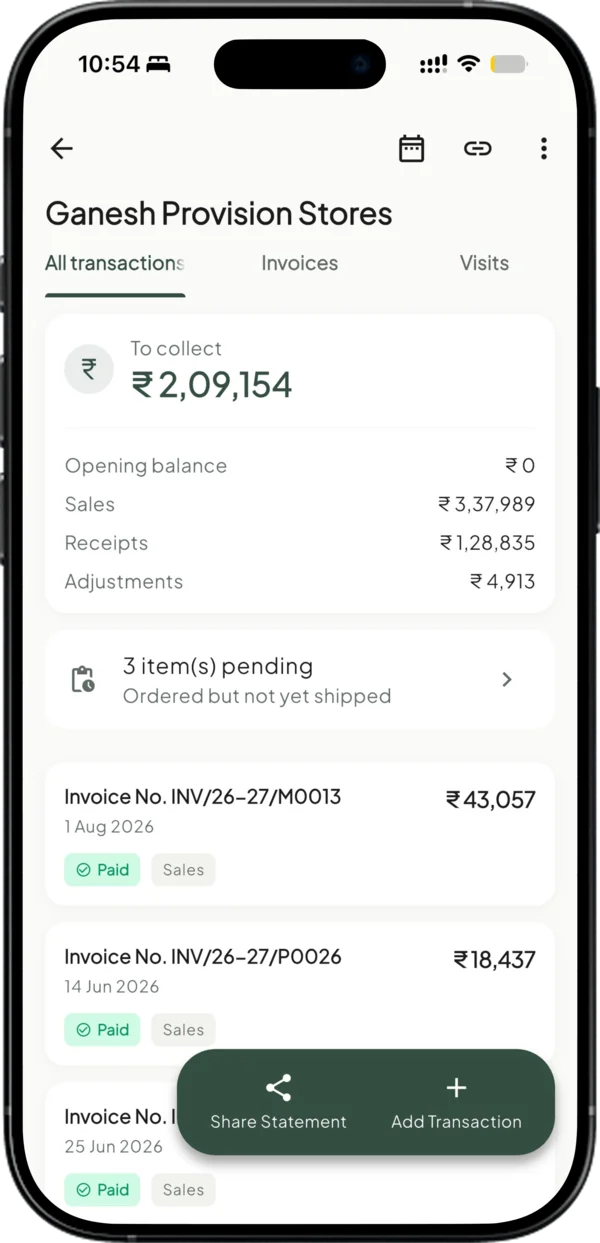
A Tally app for FMCG distributors has to survive volume. Takkada books the order at the counter against live stock, raises the invoice, and takes payment on UPI at zero MDR, so a two-hundred-shop beat does not become a two-hundred-line data-entry job. Receipts post themselves into Tally against the right bill.
A beat day, from the first shutter to the night close
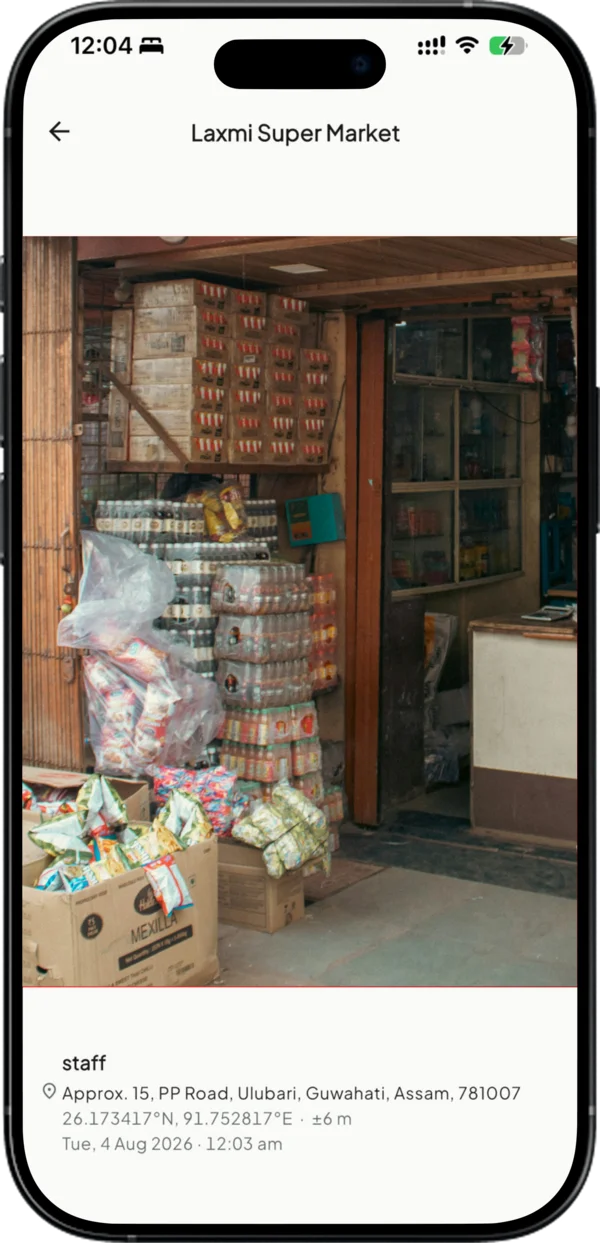
He checks in at the shop, and you know he was there
One tap marks the visit with the time and the place, and the photo carries the coordinates on it. On a beat of forty counters, the difference between a route plan and a route that happened stops being a matter of trust.
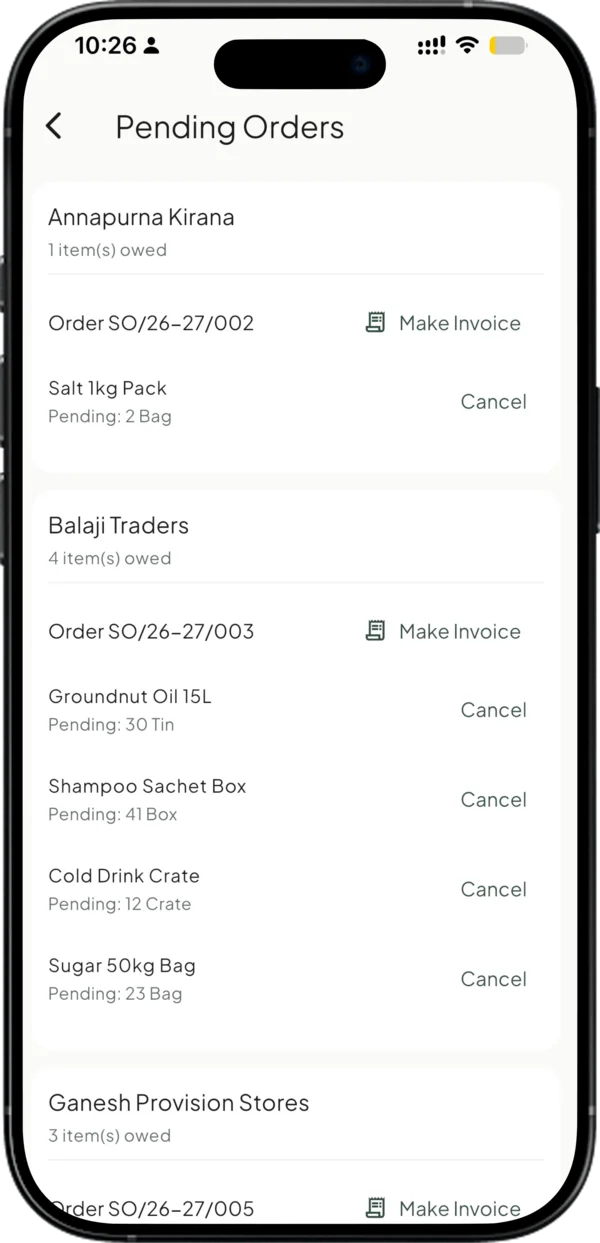
The order is booked against stock that actually exists
He sees live quantities as he takes the order, so the case of biscuits he promises is a case you can send. Pending quantities carry forward on their own, which is where a fast-moving line usually goes wrong.
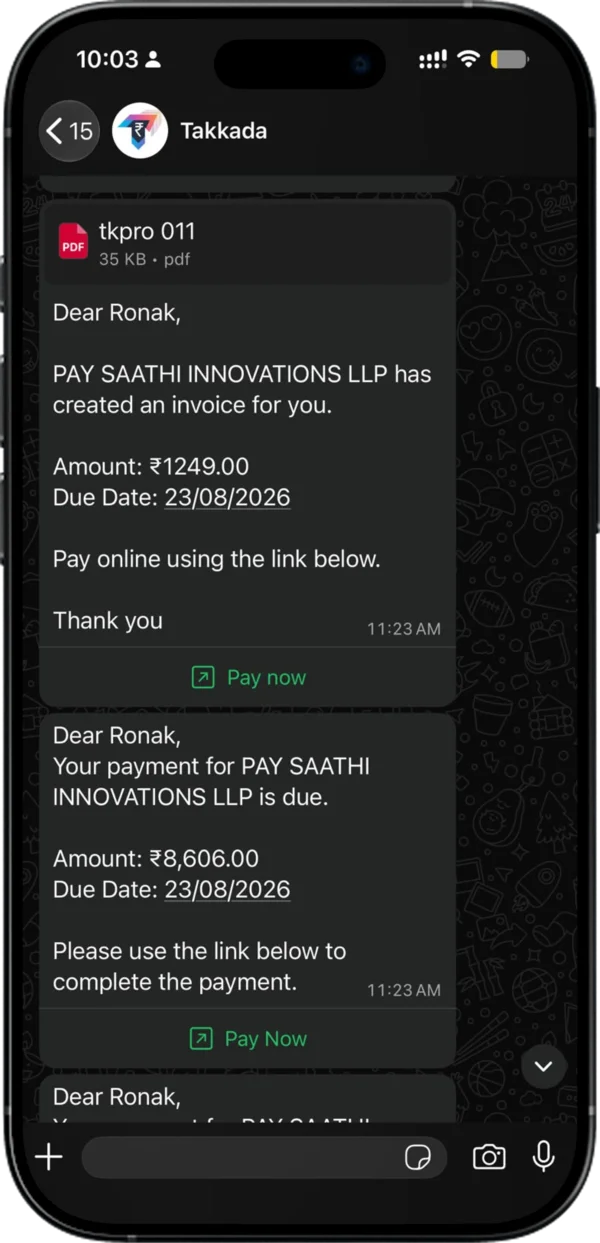
Small payments stop costing you a percentage
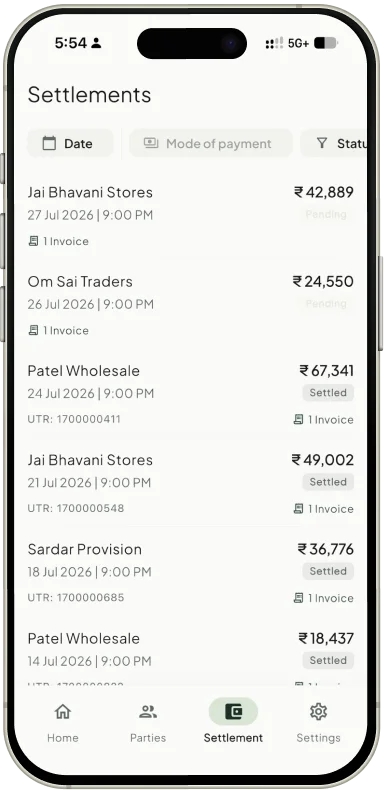
The invoice goes out on WhatsApp with a UPI link on it and the retailer pays from the counter. Zero MDR on UPI collections, no transaction cap, no monthly fee. On low-ticket, high-frequency trade that is the whole economics of the thing.
Nobody keys in a hundred receipts at night
Each payment posts into Tally against the bill it belongs to, including the ones that cover three invoices at once and the ones that arrive with no reference. The evening spent matching a bank statement to a ledger goes away.
Targets and beat coverage read themselves
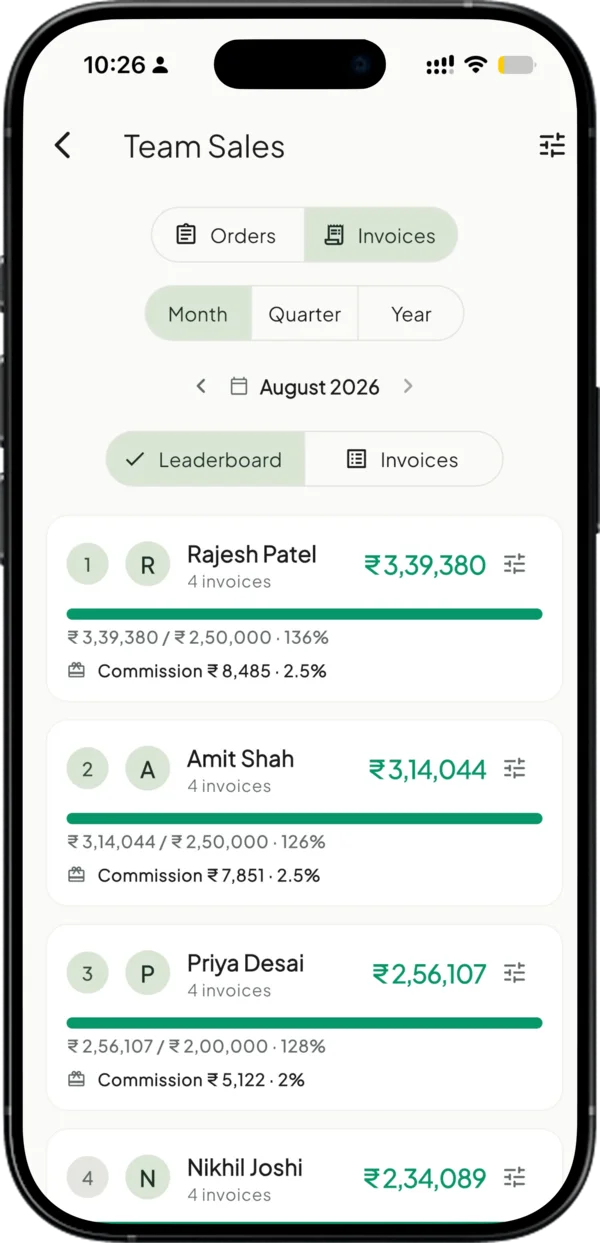
Per-salesman targets, achievement and collections sit in one screen, so the Monday review is a scroll instead of four phone calls. Access is set per person, so each man sees his own outlets and nothing else.
SIDE BY SIDE
What FMCG volume needs that a general Tally viewer misses
What you need
Takkada
Other Tally mobile apps
Order booked against live stock at the counter
Yes, with pending quantities carried forward
Order entry is common. Live stock at the point of order is not.
Cost of collecting a small-ticket payment
Zero MDR on UPI, no cap, no monthly fee
Usually a gateway percentage, or no collection at all
Receipt reconciled into Tally without typing
Yes, including partial and unreferenced payments
Rarely offered
Proof that a beat visit happened
Geo-tagged, time-stamped photo per visit
Check-in and check-out, without photo proof
Access limited to a salesman’s own outlets
Yes, down to the warehouse his stock movements touch
Usually all-or-nothing per device
Compared against the general category of Tally mobile apps on 8 August 2026. Individual products differ, so check the one you are weighing us against.
The salesman module, order booking and collection sit together here. Payment collection is an add-on available on every plan if the field team comes later.
Volume is the case this was built for. Orders, invoices and receipts are created on the phone and written into your Tally as vouchers, so the load sits on the sync rather than on a person typing at night. The part that usually breaks at that scale is collection, because a hundred small payments a day means a hundred manual receipt entries, and that is exactly the step the reconciliation removes.
Yes. The app needs a connection to read live stock and to write the order back, so a genuinely dead zone is a real limitation and we would rather say so than find out on your beat. In normal 2G and 3G coverage it works, and the payment link the retailer taps opens on his own phone and his own network, which is usually the better of the two.
Zero MDR on UPI collections, no transaction cap, no monthly fee. On FMCG the percentage matters less than the per-receipt fee, because a flat few rupees taken from a three-thousand-rupee payment is a much bigger bite than the same fee on a large invoice. Nothing is taken from any individual receipt here. The payment collection capability is a paid add-on on the annual plan.
Yes. Access is set per person and can be limited to his own parties, his own targets and his own collections, and stock permissions can be scoped down to a specific warehouse. Purchase rates, other territories and the company-level reports stay out of his app. This is set from the admin side, so it does not depend on the salesman leaving anything alone.